

Every drinking-water, wastewater, industrial-process, cooling, agricultural and recreational system needs continuous disinfection. Demand is non-discretionary and recurring.
Water. Purpose.
We’re on a mission to make the world’s most precious resource safer.
326 million trillion gallons of water on Earth.
97% is saltwater.
Just 3% is freshwater.
Less than 1% is readily accessible for human consumption.¹
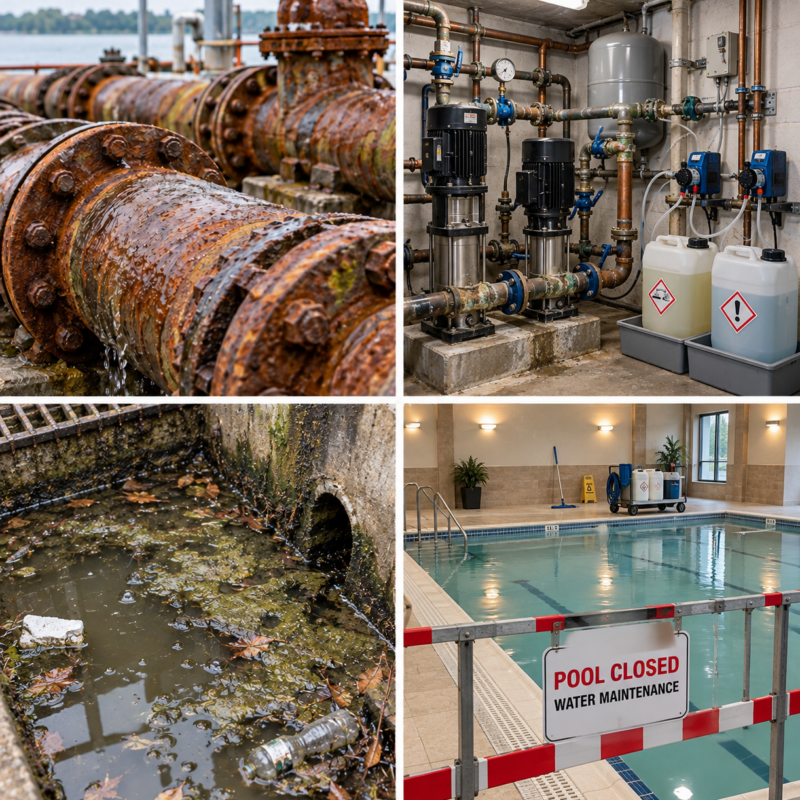
Fixing the Problems
Rapid and permanent biofilm removal
Cost-effective
Non-toxic
Environmentally friendly
Compatible with existing systems
“It is not the strongest of the species that survive, nor the most intelligent, but the one most responsive to change”. Charles Darwin.
SPT95 is the world’s only stable 32,000 ppm, 95% pure HOCl, so we’re uniquely positioned to help safeguard communities and support ecosystems. It’s time to change.
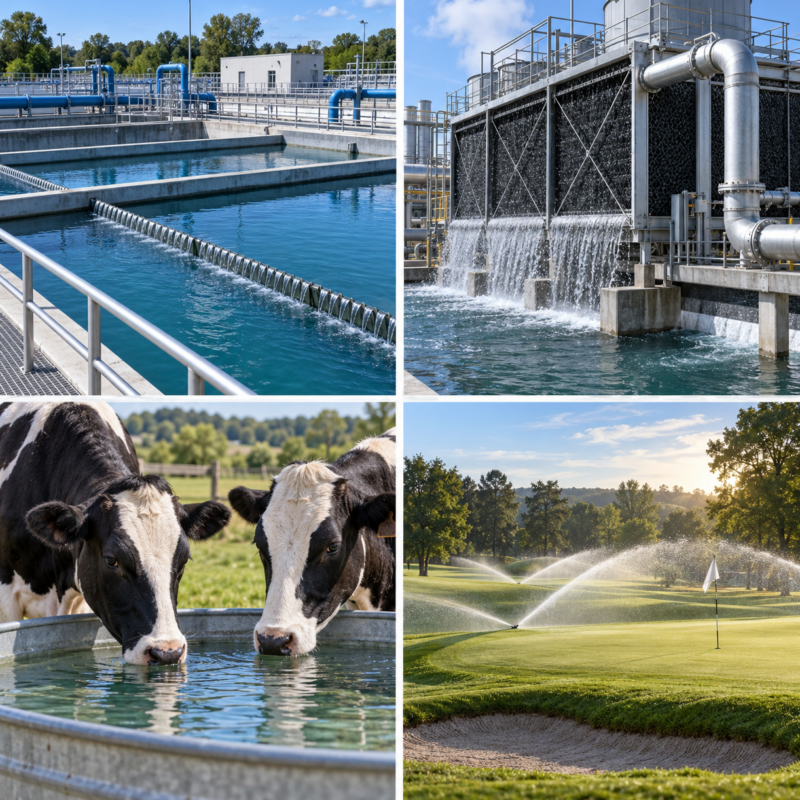
Water treatment applications
Hypochlorous acid (HOCl) rapidly kills bacteria, viruses, fungi and spores on contact with dosed water, and is known to be highly effective in breaking down the biofilms that harbour these pathogens.2-4
- Drinking water disinfection: Purifies municipal and rural drinking water supplies, protecting communities from waterborne disease.
- Wastewater treatment: Disinfects effluent before environmental discharge and reduces microbial contamination without forming harmful byproducts.
- Industrial process water: Disinfects cooling towers, desalination plants, boilers and production water systems.
- Agricultural systems: Ensures safe drinking water for animals by eliminating microbes.
- Amenity water treatment: Added to irrigation systems to prevent pathogen/fungi spread in golf courses or sports pitches.
- Recreational water treatment: Used in pools, spas and water parks as a safer alternative to chlorine. Maintains microbial safety without causing skin or eye irritation.
- Emergency and portable water purification: Provides safe water to support disaster relief, military needs or remote locations.
Three ways SPT95™ high-purity HOCl outperforms incumbents
Structural, not cyclical
01
Incumbent chemistry is problematic
Chlorine gas, hypochlorite, chlorine dioxide and bromine are frequently used to treat bulk water but barely penetrate the biofilm that shields pathogens. They also bring corrosivity, handling hazards, disinfection by-products and a fast decay, forcing continuous over-dosing and require pH-balancing.
02
Regulation is tightening the screws
Rising pressure on THMs, HAAs, AOX, chlorate and effluent consents, plus ESG and audit scrutiny, is turning treatment chemistry into an operational and reputational risk.
03
What it is
- Chemistry: 3.2% HOCl in ultra-pure water; >95% HOCl purity vs ~25% for typical ECA-generated HOCl product
- Concentration: 32,000 ppm high-purity concentrate, dosed to ~1 ppm at the point of use
- Stability: >24 months proven ambient shelf life, no on-cycle decay
- Classification: Not classified under GB-CLP at supply concentration; no Class-8 freight, no PPE in normal use
Why it wins in water
- High purity and concentration. 32,000 ppm at >95% HOCl purity puts more active oxidant per litre into the water, with a cleaner profile than dilute or on-site generated product.
- No toxic by-products. No THMs, HAAs or chlorate, and biodegrades to water, easing discharge consent and ESG pressure at the point of use.
- More effective than incumbents. Neutral-charge HOCl penetrates the biofilm that shields pathogens and kills faster at lower applied dose, not just the bulk water.
- Low corrosivity, pH-agnostic. Near-neutral to 304/316 steel and polymers, and pH-agnostic across a wide pH range, removing the pH-correction chemistry hypochlorite needs.
Outsmarting microbial defences
Over time, microbial communities secrete extracellular polymeric substances (EPS) which can form a protective matrix in water systems, pipes and drains. This defensive barrier typically blocks larger molecules and is resistant to traditional cleaning methods like charged biocides and antibiotics.
Hypochlorous acid (HOCl) works in a unique way to penetrate the EPS matrix; It is neutrally charged and penetrates the biofilm easily, allowing the HOCl to kill the embedded microorganisms, breaking down the EPS structure and flushing out the biofilm – restoring pipework hygiene and functionality.
Industry-defining science
Efficacy isn’t the only reason that HOCl stands head and shoulders above other water treatment solutions. It:
- Is non-hazardous
- Is environmentally friendly, breaking down into water and sodium chloride salt
- Has low corrosivity in use, helping to extend the lifespan of water system components
- Reduces filter replacement downtime and related costs
Why Supra Perfecta?
The science has always supported HOCl’s potential, but historically the challenge has been producing a high-purity, stable HOCl solution at scale – until now.
We are the world’s only producer of stable, >95% pure hypochlorous acid (HOCl) at scalable and commercial volumes. Our product, SPT95™ Hypochlorous Acid, is the proven standard – proven to rapidly eradicate pathogens like Legionella and Pseudomonas aeruginosa and succeed in situations where flushing and high-temperature pasteurisation did not eliminate the problem.
Our solutions are compatible with existing systems, clearing biofilm from aged infrastructure without the need to turn off the supply or system. They also remove the need for pasteurisation systems, offering energy savings of up to 20% for institutions such as hospitals, hotels and museums.
| Feature | SPT95™ Hypochlorous Acid | Chlorine Dioxide (ClO₂) |
|---|---|---|
| Summary | Advanced technology with high-purity hypochlorous acid (HOCl). Most effective at pH 2–6. | Outdated technology using a strong oxidiser. Pre-mixed solutions are not suitable for long-term storage, while on-site generators require hazardous ingredients to produce ClO₂ in situ. |
| Disinfection Speed | Fast. Small, uncharged molecules penetrate cell walls quickly, providing rapid action against bacteria, viruses and biofilms with short contact times. | Slower. Requires longer contact times and works by oxidation rather than chlorination, making it slower against bacteria and viruses. |
| Toxicity & By-products | Produces no harmful by-products, is non-toxic. | Produces chlorites and chlorates, which are harmful and highly regulated. Accurate dose control is essential. |
| Storage & Transport | Stable at concentrations up to 32,000 ppm. Store in supplied black packaging. Non-hazardous for transport and storage. | Concentrates are unstable. In situ generation requires specialist equipment, and precursor chemicals are classified as Dangerous Goods (UN9191, UN1495, UN1789). |
Water treatment solution for dilution plants
Drinking water safety and water biosecurity are hot topics, especially in geographical areas where there’s no natural drinking water source.
Using high-concentration, hypochlorous acid (HOCl) in water treatment paired with on-site dilution at the point of dosage offers significant advantages in cost, logistics, efficacy and safety. It also removes the cost associated with hazardous transport and storage.
This model is ideal for large-scale and decentralised water systems as well as municipal water plants and smaller rural installations. Local dilution plants offer scalability and adaptability with customisable dosage systems at treatment plants, ensuring consistent and efficient application.
In addition to producing SPT95 Hypochlorous Acid, Supra Perfecta have developed a Water Effluent Treatment plant (WET)
Treating wastewater before it’s released or reused is critical for sustaining ecosystems and safeguarding communities from waterborne disease. Because HOCl has no “chlorinated by-products”, it removes the need to dechlorinate waste water.
Our bespoke turnkey water effluent treatment (WET) systems can be scaled from 300 litres per hour up to 50,000 litres per hour dependent on the scale of the plant. It can therefore be used in an individual household, housing community or large-scale wastewater treatment. We can also deploy these potable systems to support overseas emergency response and humanitarian crises.
Our WET systems have numerous environmental, public health and economic advantages.
Professor David Crouch, a specialist in helping organisations prepare for biological and chemical threats, speaks to our Chief Technical Officer, Dr John Webster, about our water effluent treatment stations and why they can help with natural disasters and humanitarian crises across the world.
Our accreditations
Our commitment to excellence is reflected in our Internationally recognised accreditations. Our SPT95™ Hypochlorous Acid meets all relevant standards required for use in water treatment, disinfectant, agriculture and cosmetics. We are also proud to be registered on the NHS framework. We also operate in line with ISO standards, ensuring every product meets strict regulatory and operational benchmarks.


Read more about the extensive applications of SPT95™ Hypochlorous acid here, including our ActaPureTM Disinfecting Handrub.
Sources:
1 US Geographical Service, https://www.usgs.gov/water-science-school/science/how-much-water-there-earth#overview
2 Haralović V et al. 2025. https://doi.org/10.3390/biomedicines13122921
3 Aherne et al. 2022. https://doi.org/10.1186/s12903-022-02453-2
4 Palau et al. 2022. https://doi.org/10.1128/spectrum.02365-22